
The Board
The Board is responsible for the governance of the Company, governance being the systems and procedures by which the Company is directed and controlled. A prescribed set of rules does not itself determine good governance or stewardship of a Company and, in fulfilling their responsibilities, the Directors believe that they govern the Company in the best interests of the shareholders, whilst having due regard to the interests of other stakeholders in the Group including, in particular, customers, employees and creditors.
The Chair
The Chair is responsible for making sure that the Board agenda concentrates on the key issues, both operational and financial, with regular reviews of the Company's strategy and its overall implementation. The Chair should ensure that the Board receives accurate, timely and clear information and there should be good information flows within the Board and its Committees as well as between the Non-Executive Directors and senior management.
Non-executive directors
Non-Executive Directors should be independent to be able to provide appropriate oversight and to perform their role. The Non-Executive Directors of FIH:
The three principal standing committees of the Board are the Audit & Risk, Nominations and Remuneration Committees
The Audit & Risk Committee comprises Dominic Lavelle, Nick Henry, Holger Schröder and Robert Johnston and is chaired by Dominic Lavelle. The Audit & Risk Committee reviews the external audit activities, monitors compliance with statutory requirements for financial reporting and reviews the half year and annual financial statements before they are presented to the Board for approval. The Audit & Risk Committee also keeps under review the scope and results of the audit and its cost effectiveness and the independence and objectivity of the Auditor. The Audit & Risk Committee reviews the effectiveness of Company's internal control and risk management frameworks.
The Nominations Committee comprises Nick Henry, Holger Schröder Robert Johnston and Dominic Lavelle and is chaired by Nick Henry. The Committee nominates candidates (both executive and non-executive) for the approval of the Board to fill vacancies or appoint additional persons to the Board. It also makes recommendations regarding the composition and balance of the Board.
The Remuneration Committee comprises Robert Johnston, Nick Henry, Holger Schröder and Dominic Lavelle, and is chaired by Robert Johnston. Although not a member of the Committee, the Committee would normally consult the Chief Executive on proposals relating to the remuneration of members of the Group's senior management team, though never for matters related to his own remuneration package. The Committee, on behalf of the Board, determines all elements of the remuneration packages of the executive Directors and would also approve any compensation arrangements resulting from the termination by the Company of a Director's service contract. The Committee also approves the grant of share options.
As an AIM listed Company, FIH group plc (FIH) has adopted the Quoted Companies Alliance (QCA) Corporate Governance Code (the Code). The Code identifies ten corporate governance principles that AIM companies should follow. Details of how FIH follows these ten principles are set out below.
The strategy and business model of the Group are set out in the in the Strategic Review on pages 3 to 11 of the Group’s 2023 Annual Report.
The Group’s strategy and business model are developed by the Chief Executive and his team, and approved by the Board. The management team, led by the Chief Executive, is responsible for implementing the strategy and managing the business of the Group.
Outlook and Strategy: Performance has continued to progress, giving confidence that the Group strategy, as detailed in the Strategic Review in the Annual Report, is on course. Increased focus can now be brought to bear on opportunities to invest in further developing the Group’s existing businesses and on potential complementary strategic acquisitions that either strengthen existing operations or provide improved growth opportunities.
The Group seeks to maintain a dialogue with its shareholders in order to communicate the Group’s strategy and results and to understand the needs and expectations of its shareholder base.
The Board communicates with shareholders through:
The Board is aware of the need to protect the interests of minority shareholders, and balancing those interests with those of any more substantial shareholders, including those interests of the Jerry Zucker Revocable Trust, a major shareholder holding nearly 29% of the issued share capital and voting rights, who is represented on the Board by the non-executive Director, Robert Johnston.
Mr Johnston is an experienced non-executive Director and investment professional and has served on the Boards of several quoted companies in both North America and in UK, including Fyffes PLC and Supremex, Inc. The continuation of Mr Johnston’s appointment is subject to his ongoing satisfactory performance and re-election by shareholders at every third AGM.
Beyond the Annual General Meeting, the Chief Executive and the Chair offer to meet with all significant shareholders after the release of the half year and full year results. The Chief Executive and the Chair are the primary points of contact for the shareholders and are available to answer queries from shareholders throughout the year.
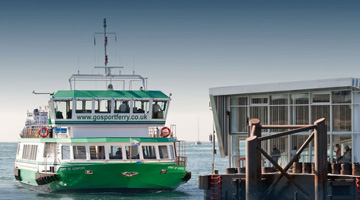
The Directors are aware of the impact that its business activities have on the communities in which the Group's businesses operate, particularly in the small remote community in the Falkland Islands, and also the importance of the ferry business to the population of Gosport.
The Group is aware of its corporate responsibilities to its stakeholders including staff, suppliers, customers and the wider society. The Group endeavours to take into account feedback received from stakeholders, by making amendments to its business plans and operations as appropriate.
The environmental impact of the Group's activities is carefully considered and the maintenance of high environmental standards is a key priority.
The Chief Executive regularly meets with the Gosport Ferry and Momart senior management and speaks with the Falkland Islands senior management to discuss the impact of the Group’s activities within their local communities.
As an AIM listed Company with a relatively small head office function, the Company is also reliant on its legal and professional advisors for updates to requirements of social responsibility legislation.
The Board has overall responsibility for the systems of risk management and internal control and for reviewing their effectiveness. The internal controls are designed to manage rather than eliminate risk and provide reasonable but not absolute assurance against material misstatement or loss.
The Board has established Audit & Risk, Remuneration, and Nominations Committees a summary of which is set out above, and in this Corporate Governance section.
The Company receives regular feedback from its external auditors on the state of its internal controls and has established an internal audit function led by the Chief Financial Officer, reporting to the Chair and Chief Executive, to systematically review each area of its business to monitor the effectiveness of internal controls.
The more significant risks to the Group’s operations and the management of these have been disclosed in some detail in the Chief Executive’s Strategic Review on pages 3 to 11 of the 2023 Annual Report.
The Group maintains appropriate insurance cover in respect of actions taken against the Directors, as well as against material loss or claims against the Group. The insurance cover in place is reviewed on a periodic basis.
The Board considers itself sufficiently independent. The QCA Code suggests that a board should have at least two independent non-executive Directors. The Board have considered each non-executive Directors’ length of service and interests in the share capital of the Group and consider that Mr Johnston, Mr Lovelle and Mr Schröder are independent of the executive management and free from any undue extraneous influences which might otherwise affect their judgement. All board members are fully aware of their fiduciary duty under Company law and consequently seek at all times to act in the best interests of the Company as a whole.
Whilst the Company is guided by the provisions of the Code in respect of the independence of Directors, it gives regard to the overall effectiveness and independence of the contribution made by Directors to the Board in considering their independence, and does not consider a Director’s period of service in isolation to determine this independence. The Board acknowledge that Robert Johnston, who joined the Board on 13 June 2017, represents the Company’s largest shareholder, “The Article 6 Marital Trust, created under the First Amended and Restated Jerry Zucker Revocable Trust dated 4-2-07”, i.e. the “Zucker Trust”, which has a beneficial holding of 3,596,553 ordinary Shares, representing approximately 29% of the Company’s issued share capital. The Board has considered Mr Johnston’s independence, given his representation of this shareholding and all board members have satisfied themselves that they consider Mr Johnston to be independent. This is as a consequence of (i) the fact that Mr Johnston has considerable international investment expertise, and (ii) that the shareholding of his employer in FIH represents only a small part of its wider portfolio, but nonetheless aligns him with the interests of FIH shareholders generally.
Directors who have been appointed to the Company have been chosen because of the skills and experience they offer and their personal qualities and capabilities. Full biographical details of the Directors are included under “the Board” section of the website which give an indication of their breadth of skills and experience.
The Board regularly reviews the composition of the Board to ensure that it has the necessary breadth and depth of skills to support the ongoing strategy of the Group.
The Chair and the Company Secretary ensure each Director’s skillset is kept up to date. During the course of the year, the Directors received updates from the Company Secretary in relation to corporate governance matters. Each Director takes responsibility for maintaining his skill set, which includes roles and experience with other boards and organisations as well as formal training and seminars.
Non-executive Directors have a contractual right to external advice, at the Company's expense, when necessary.
The Board is aware that a board comprising all men and no women does not reflect current views of best practice for diversity. We continue to keep this issue under review.
The non-executive Directors monitor the personal and corporate performance of the Chief Executive, including asking the Company’s senior management, auditors, and other advisors to report on his performance.
The Chief Executive participates in an annual performance related bonus arrangement. As soon as reasonably practicable after the announcement of the preliminary results or the publication of the accounts of the Company for each financial year, the Remuneration Committee considers the performance of the Company and the Chief Executive in that year against relevant targets and then, in its absolute discretion, determines the value of any bonus to be received by the Chief Executive in respect of that year. None of the Non-Executive Directors receive any share options or any performance related bonuses.
The Board considers, via the Nominations Committee, the need for the periodic refreshing of its membership. The Chair was appointed in August 2023, and a new non-executive Director appointed in June 2023.
Succession planning is considered by the Nominations Committee.
The last Board effectiveness review was conducted in March 2022 and given the Board has recently appointed a new Chair, the Board intends to carry out another review within the next financial year.
FIH is driven by a guiding set of principles or ways of behaving and doing business. The Group is focused on principled performance, and transparent reporting from the businesses to the Board, and from the Board to the Shareholders and advisors through regular meetings, presentations, the Annual Report and at the Annual General Meeting.
Senior management are encouraged to take personal responsibility for achieving the Group’s objectives and to act with openness, integrity and trust. Staff are encouraged to ask for help, admit to their mistakes and put things right. The Group does not operate a blame culture. The non-executive members of the Board are encouraged to have open dialogues with senior management around the Group about their opinions and concerns.
Senior management across the organisation are comfortable coming forward with legal, compliance, and ethics questions and concerns without fear of retaliation at the frequent subsidiary level Board meetings, which are all attended by the Chief Executive and the Group’s Financial Controller.
The Group recruits and screens employees based on integrity, as well as competence. Employees are well-treated when they leave or retire.
The Group has in place an anti-bribery policy and an anti-slavery policy which are both reviewed at appropriate intervals.
The Board has overall responsibility for the strategic direction and performance of the Group. The executive Director has day-to-day responsibility for the operation of the Group’s businesses and implementing the strategy of the Board.
The Board meets at least five times per year. The Board is provided with detailed financial reports of the Group's financial performance on a regular monthly basis with more frequent updates if required. Detailed written reports are provided one week prior to the Company's Board meetings. Written recommendations from the executive Director are delivered in a timely manner with supporting documentation, supplemented as required by reports from external professional advisers so that the Board can constructively challenge recommendations before making decisions.
The Company’s auditors report on the financial controls in detail at the Audit & Risk Committee meeting held in June.
The Executive Director and the Chair are the primary points of contact for the shareholders and are available to answer queries over the phone or via email from shareholders throughout the year.
The Group has Audit & Risk, Remuneration and Nominations Committees. The Chair is a member of the Audit & Risk Committee and Remuneration Committee and the Chair of the Nomination Committee. Mr Schröder is a member of the Remuneration Committee, the Nomination Committee and the Audit & Risk Committee. Mr Johnston is a member of the Audit & Risk Committee and Nomination Committee and is the Chair of the Remuneration Committee. Mr Lovelle is a member of the Remuneration committee and the Nomination committee and is the Chair of the Audit & Risk Committee. Formal terms of reference have been agreed for all Board Committees. The responsibilities of each of these have been summarised below:
Audit & Risk Committee
Remuneration Committee
Nomination Committee
The Chief Executive and the Chair offer to meet with all significant shareholders after the release of the half year and full year results, and encourage all shareholders to attend and ask questions of the Board as a whole at the Annual General Meeting.
The Executive Directors and the Chair are the primary points of contact for the shareholders and are available to answer queries over the phone or via email from shareholders throughout the year.
There is a strong focus on transparent reporting in the half year interim results and annual report, including the challenges faced by the Group both in the reporting periods and in the future.
The Group’s website is regularly updated. The Group’s financial reports and Annual Reports can be located under the “Financial Results and Reports” section of the website. Notices of the General Meetings of the Company can be located under the “AGM and General Meetings” section of the website.
The results of voting on all resolutions at future general meetings will be posted to the Group’s website, including any actions to be taken as a result of resolutions of which votes against have been received by a significant proportion of votes.
Date last reviewed: 14 December 2023